English| EUR
Suggested for you
More currencies
Choose a language
El Calafate is Argentine, Patagonian and, for most travellers, the doorway to ice. The confusion is understandable: Patagonia spans two countries, and the region's best-known granite towers stand on the Chilean side. This Is El Calafate in Patagonia guide sets out where the town sits, which parks flank it, and what that means for anyone crossing to Torres del Paine.
Quick answer
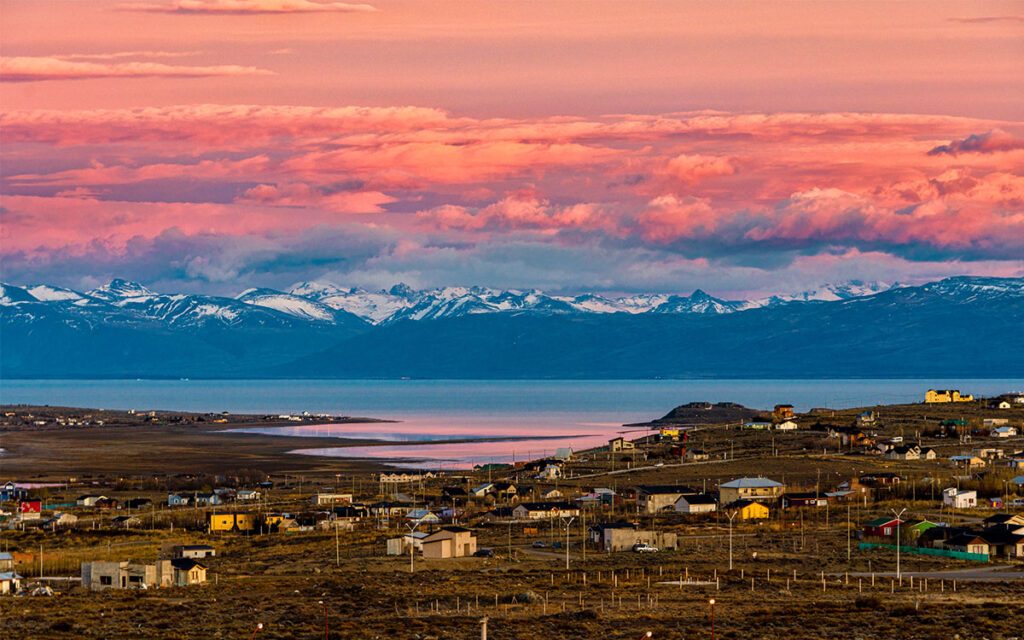
Yes. El Calafate sits in Argentine Patagonia, in Santa Cruz Province, on the southern shore of Lago Argentino. Torres del Paine lies southwest across the Chilean border, in the Region of Magallanes and Chilean Antarctica — the same Patagonian landscape under a different flag. The park's gates open daily 08:30–20:30, with a 34,000 CLP conservation fee per person.
The town takes its name from a thorny shrub, Berberis microphylla — the calafate — whose dark berries flavour local liqueurs and, by a much-repeated Patagonian saying, guarantee that whoever eats them will come back. The detail says something about the place. El Calafate grew from a wool-trading post founded in 1927 into a service town for glacier travel, and it did so entirely inside Argentina's Santa Cruz Province. The question is el calafate in patagonia therefore has a short answer, complicated only by the fact that Patagonia is a geographic region rather than a political one, with no border post of its own. Patagonia begins near the Río Colorado and runs south to Cape Horn, spanning both Argentina and Chile. The Argentine side is wide, dry and horizontal: steppe grass, guanaco herds, and the milky water of Lago Argentino. The Chilean side is narrower and wetter, cut into fjords. Both draw on the Southern Patagonian Ice Field, which feeds the Perito Moreno Glacier inside Los Glaciares National Park, west of town, and the hanging ice of the Cordillera del Paine in the Region of Magallanes and Chilean Antarctica, Chile. Spanish-speaking travellers ask ¿El Calafate está en la Patagonia? and get the same reply. The frontier is administrative, not ecological. Lenga forest, condors and the southwest wind ignore the checkpoint at Cerro Castillo entirely, which is why the two areas read as one set of Patagonian landmarks to anyone looking at a map. For planning, the distinction matters. El Calafate stands in a different country from Torres del Paine, so passports, two currencies and a customs queue enter any itinerary that uses the town as a base. Puerto Natales is the closer Chilean anchor for the park, though plenty of visitors still leave the Argentine side before first light. Anyone weighing an El Calafate to Torres del Paine day trip should treat the Chilean park's daily rhythm as the fixed point and the Argentine end as the flexible one, and should confirm current gate and pass details on the official site, pasesparques.cl, or by phone on +56612238554. The phrasing behind the query is el calafate in patagonia conceals the real planning problem: two national administrations, one landscape, and a frontier drawn across the middle of it. Answer it early and the rest of the route — glacier days east, granite days west — arranges itself.
“The frontier between the two Patagonias is administrative, not ecological.”
El Calafate is situated in Argentine Patagonia. To reach Torres del Paine National Park, travelers typically cross the international border via the Rio Don Guillermo pass.
RN 40 and Route 7 (via Paso Río Don Guillermo)
RN 40 and Route 7 (via Paso Río Don Guillermo)
Plan to arrive between 08:30–10:00 to avoid peak daily crowds and ensure maximum daylight for your visit.
Torres del Paine National Park operates on a consistent daily schedule throughout the week to accommodate visitors traveling from El Calafate.
The optimal time to visit Torres del Paine from El Calafate is during the shoulder seasons of October to November and March to April. Planning your visit for the best arrival window of 08:30–10:00 ensures you avoid peak daily crowds and maximize daylight hours for your trek.
Cool, windy, 5°C to 15°C
Spring brings longer days and blooming flora, though high winds are common. Early arrival remains essential to bypass buses from Argentina.
Mild, variable, 7°C to 18°C
This is peak season with the longest daylight hours. Expect dense crowds at trailheads during the morning hours.
Cool, stable, 3°C to 13°C
Autumn offers reduced winds and fall foliage. This window provides quiet trails if you arrive within the recommended morning timeframe.
—
Arrival between 08:30–10:00 is the most effective way to secure a quieter experience. Mid-week visits further reduce congestion compared to weekends.
Verdict: For the best experience, plan your trip for mid-week arrival between 08:30–10:00 during the months of April or October.
This sequence suits travellers based in El Calafate who want to see Torres del Paine in a single long day rather than relocating to Puerto Natales — expect roughly 16 to 18 hours door to door, most of it a full-day guided coach run. It is a driving-heavy plan built around three or four viewpoint stops, not a trekking itinerary.
Guided day trips collect from central hotels before dawn and head south on Ruta 40 towards the border. Sleep on this leg; the road is paved but long.
Argentine exit at Cancha Carrera then Chilean entry at Cerro Castillo, usually 45 to 90 minutes combined. Carry your passport in hand luggage and declare no fresh food, seeds or dairy — Chilean inspection is strict.
First park sector, with the Cordillera Paine and the Torres seen across Laguna Amarga. A short walk from the car park; wind here is constant, so secure hats and camera straps.
Fifteen-minute walk on gravel from the Pehoé road to the Salto Grande waterfall, then the Mirador Nordenskjöld lookout for the Cuernos del Paine. Allow about an hour for both.
Photo stop at the Pehoé viewpoint over the turquoise lake, with a packed or pre-booked lunch nearby. Around 90 minutes including the break.
Suspension-bridge crossing and 20-minute beach walk to see grey icebergs drifting from Grey Glacier. Boots help; the beach is loose shingle.
Retrace the border route with a second passport check, then north to El Calafate. Budget four to five hours and expect arrival well after dark.
Everything you need to know about is el calafate in patagonia
El Calafate is indeed located in the Argentine portion of Patagonia, while Torres del Paine National Park is situated across the border in the Chilean region of Magallanes and Chilean Antarctica. The two areas share the same rugged landscape but are separated by international borders. Travelers often ask is el calafate in patagonia a convenient starting point for Chilean excursions. While close in proximity, a border crossing is required for travel between these two landmarks. The park entrance fee is 34,000 CLP per person for visits up to 3 days. This conservation fee covers access to the trails and natural areas within the park. The best arrival window is 08:30–10:00. Arriving during this period helps you avoid peak daily crowds and ensures you have full daylight for your trekking activities. Yes, both locations are part of the broader Patagonia region but fall under different national jurisdictions. Understanding this distinction is helpful when planning your logistics and customs requirements for the border crossing. Official tickets and access passes can be managed through the official site at https://pasesparques.cl/. Always check this resource for the most current information regarding park access. The park is open daily from 08:30–20:30. These hours apply throughout the week, including weekends and holidays.
Torres del Paine Tours from El Calafate
Read more GuideIs Torres del Paine in Chile or Argentina?
Read more GuideHow to Get from El Calafate to Torres del Paine
Read more GuideBus from El Calafate to Torres del Paine
Read more Tickets & toursPrivate Tours from El Calafate to Torres del Paine
Read more