
English| EUR
Suggested for you
More currencies
Choose a language
El Calafate and Torres del Paine sit on the same stretch of Patagonia but in different countries, and the gap between them closes only by road. This how to get from El Calafate to Torres del Paine guide sets out what the journey actually involves: the frontier at Cerro Castillo, the Puerto Natales pivot, and the daylight arithmetic behind every itinerary. Read it before deciding between one long day and a night on the Chilean side.
Quick answer
Every route from El Calafate to Torres del Paine runs overland and crosses into Chile at Cerro Castillo, reaching park gates that open 08:30–20:30 daily. There is no direct flight, rail or ferry link. Most itineraries pass through Puerto Natales, and the recommended 08:30–10:00 arrival window means a pre-dawn departure for anyone doing this in one day.
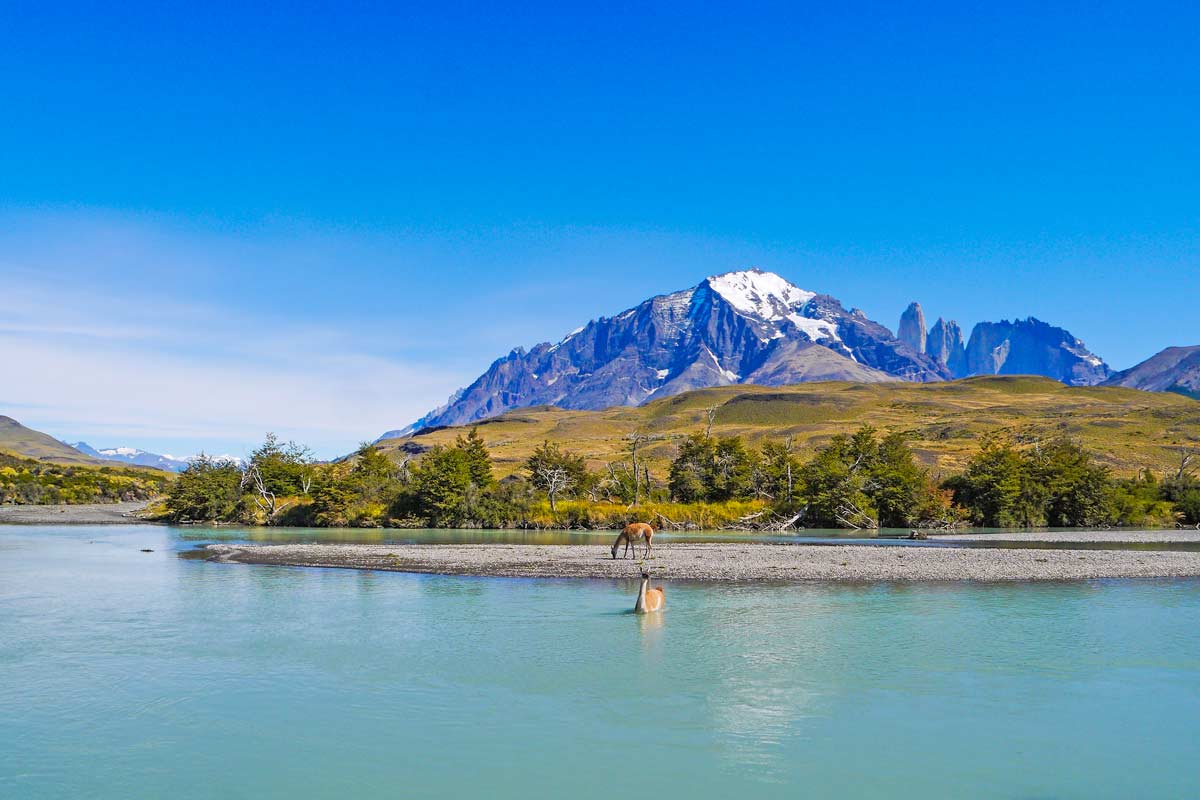
Torres del Paine has held UNESCO Biosphere Reserve status since 1978, yet the park has no airport of its own, and the runway most travellers use sits in a different country. That single fact explains why how to get from El Calafate to Torres del Paine is one of the most searched logistics questions in southern Patagonia. El Calafate belongs to Argentina's Santa Cruz province; the park lies in Chile, inside Última Esperanza Province in the Magallanes Region. Between the two runs a corridor of steppe, sheep estancia and wind, interrupted by an international frontier at Cerro Castillo. Nothing about the journey is technically difficult. It is simply longer than the map suggests, and it is governed by clocks that travellers do not control: the border post's, the park gate's, and the sun's. The corridor has a pivot point, and it is Puerto Natales. Almost every version of the trip passes through or near this Chilean port town, which functions as the park's logistical anteroom. Understanding that geometry changes the decision. Torres del Paine is administered by CONAF, and its entrances are scattered rather than centralised: Laguna Amarga in the north-east, Sarmiento to the south of it, Serrano near the Río Serrano sector. Arriving, in other words, is not a single event but a sequence — frontier, town, gate, trailhead. A traveller who treats Puerto Natales as an overnight stop reaches the first gate rested and early. A traveller who attempts the whole thing between breakfast and dinner spends most of the available daylight watching the cordillera through glass. The classic Torres del Paine day trip from El Calafate is legal, widely sold and popular, but it compresses the Cuernos del Paine, Lago Pehoé and the Salto Grande viewpoint into a handful of hurried hours. Base Torres, the trek most visitors picture when they imagine the park, does not fit that schedule. Seasonality sharpens the choice. Between November and March the Patagonian day stretches deep into the evening, which widens the useful window at the far end of a long drive; in the shoulder months the same route delivers travellers into fading light. Wind is the second variable, and it is no footnote. Gusts funnel off the Sierra Baguales and across the steppe with enough force to slow vehicles and turn an exposed lookout into an endurance exercise. Snow can close sections of the frontier road in winter. None of this makes an El Calafate to Torres del Paine transfer unreliable; it makes rigid schedules unwise. Read practically, the answer to how to get from El Calafate to Torres del Paine is less a route than a budget of daylight. Travellers weighing cómo llegar de El Calafate a Torres del Paine against a night on the Chilean side should decide first what they intend to do inside the park, then work backwards to a departure time. Those planning a full trek almost always sleep closer to the massif. Those content with viewpoints and guanacos can manage the round trip. The route detail, timing, costs and packing specifics follow below.
“Getting to Torres del Paine from El Calafate is less a route than a budget of daylight.”
Traveling from El Calafate to Torres del Paine National Park requires crossing the international border between Argentina and Chile. The journey primarily utilizes Route 40 and Route 7 (Chile) via the Río Don Guillermo border crossing.
Direct service via Río Don Guillermo border crossing
Direct hire from El Calafate to Park entrance
Plan to arrive between 08:30–10:00 to avoid mid-day tour group arrivals and maximize daylight for trekking.
The best arrival window for visiting Torres del Paine from El Calafate is between 08:30 and 10:00. Arriving during this period helps avoid mid-day tour group congestion and maximizes available daylight for trekking.
Long days, 5°C to 18°C
Peak trekking season with the most daylight hours available for activities.
Cooler, 2°C to 13°C
Shoulder season offers fewer visitors and stable weather conditions.
Cold, -2°C to 7°C
Winter months feature limited daylight and potential snow at higher elevations.
—
Early arrivals minimize time spent in border and park entrance queues.
Verdict: The most efficient time to visit is during the shoulder months of April or October, arriving at the park gates between 08:30 and 10:00 on a weekday.
Torres del Paine National Park maintains consistent daily operating hours throughout the week to accommodate visitors arriving from El Calafate. Access is available every day from 08:30 to 20:30.
Crossing from El Calafate into Chile is an international border day, so the prep that matters most is documentation, park registration, and offline copies.
Everything you need to know about how to get from el calafate to torres del paine
Travelers typically reach the park via cross-border bus services or private transfers that navigate the border crossing between Argentina and Chile. Understanding how to get from El Calafate to Torres del Paine involves coordinating international transit logistics, which often start early in the morning. Many visitors choose a guided El Calafate Torres del Paine tour to simplify these complex border requirements.
To avoid peak congestion from tour groups and maximize your trekking time, the best arrival window is between 08:30 and 10:00. This early start helps ensure you have sufficient daylight for exploring iconic landmarks like the Base Las Torres trail. Planning how to get from El Calafate to Torres del Paine by starting early is essential for a successful day trip.
Yes, all foreign visitors must pay an entrance fee of 34 USD. This payment supports the maintenance of the park trails and conservation of the Magallanes region biodiversity. You can process your documentation via the official site before you determine how to get from El Calafate to Torres del Paine.
The park maintains consistent daily operations with opening hours from 08:30 to 20:30 throughout the entire week, including weekends. This schedule remains stable regardless of the season, allowing for predictable travel planning. Always verify your transport schedule aligns with these hours to ensure you have full access to the park facilities upon arrival.
Yes, an organized excursion allows you to experience the granite towers and glacial lakes within a single day. These logistics-heavy trips handle the border crossing for you, making it the most efficient way to see the park without staying overnight. Using a professional service remains a popular option for those researching how to get from El Calafate to Torres del Paine.
The most important factor is preparing your passport and necessary customs documents for the Argentina-Chile border. Because travel times can fluctuate due to customs clearance, allow extra time for the journey between these two countries. Always check for current international transit requirements before departing.
Your foreign adult entrance fee of 34 USD is valid for up to 3 days of access. This allows for flexibility if you decide to extend your stay or explore different sectors of the park after your initial arrival. Ensure you keep your digital or printed pass accessible during your visit.
Torres del Paine Tours from El Calafate
Read more GuideIs Torres del Paine in Chile or Argentina?
Read more GuideIs El Calafate in Patagonia?
Read more GuideBus from El Calafate to Torres del Paine
Read more Tickets & toursPrivate Tours from El Calafate to Torres del Paine
Read more